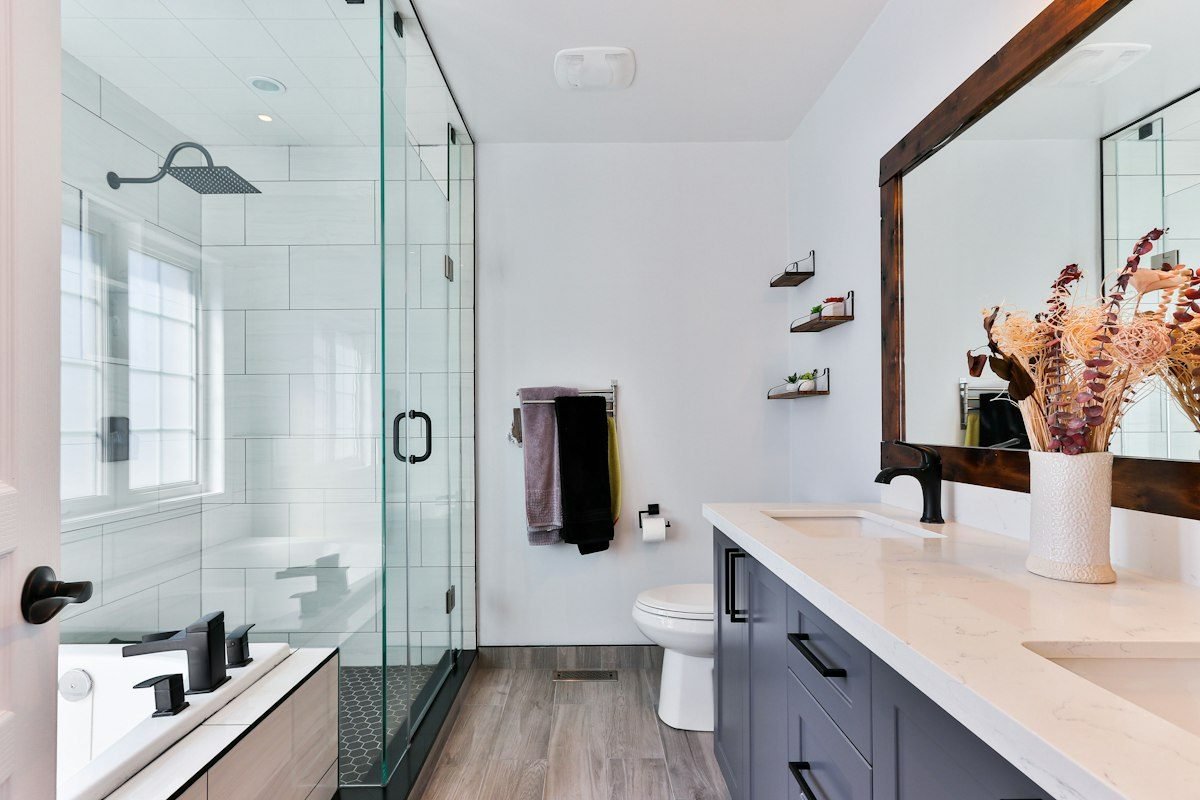
The bathroom is one of the most intimate, highly utilized, and value-sensitive spaces in any residential property. Real estate appraisal data consistently confirms that updated, luxurious bathrooms yield among the highest returns on investment (ROI) of any home improvement endeavor. A beautifully appointed bathroom offers an invigorating sanctuary for morning preparation and a serene retreat for evening unwinding.
However, bathrooms are also notorious for rapid budget blowouts. Between specialized plumbing contractors, electrical rewiring, waterproof tiling membranes, and high-end fixtures, an ordinary 5×8 guest bath remodel can easily spiral from a planned $7,000 budget into a financially painful $22,000 catastrophe.
The secret to a high-impact, budget-conscious bathroom renovation is knowing precisely where to invest and where to innovate. By preserving the existing rough plumbing footprint, executing high-style DIY surface updates, selecting smart prefabricated fixtures, and mastering waterproof tiling fundamentals, you can achieve a five-star luxury aesthetic for a fraction of traditional contractor costs.
This comprehensive master guide reveals the insider strategies, financial allocation blueprints, material sourcing secrets, and step-by-step installation methodologies that allow you to completely renovate your bathroom on a realistic, disciplined budget.
Key Takeaways & Quick Summary
- Plumbing footprint discipline: Never relocate the toilet waste stack, tub drain, or supply valves unless structurally unavoidable; keeping existing footprints saves $4,000 to $8,000.
- Prefab vanity packages: Sourcing all-in-one pre-assembled vanities (including solid stone top, undermount porcelain sink, and soft-close drawers) slashes fabrication costs.
- Tub refinishing vs replacement: Reglazing an old cast-iron or porcelain tub with a high-gloss epoxy coating costs $350 vs. $3,000+ for demolition and plumbing rough-in.
- Subway tile luxury hacks: Classic $0.15 ceramic subway tile can be laid in sophisticated herringbone, stacked vertical, or cross-hatch patterns to deliver a high-end designer look on a shoestring budget.
- Lighting and mirror optical illusions: Replacing standard builder-grade plate glass mirrors with backlit LED anti-fog architectural mirrors expands visual space dramatically.
- Strategic Budget Allocation and the Golden Footprint Rule
- The Vanity and Fixture Revolution: Sourcing Luxury for Less
- Waterproof Wet Areas: Budget Tile Mastery and Tub Reglazing
- Lighting, Ventilation, and Sensory Finishes
- Comparative Decision Matrix
- Frequently Asked Questions
- Master Execution Roadmap & Troubleshooting
Strategic Budget Allocation and the Golden Footprint Rule
The Golden Rule: Never Move the Plumbing Stacks
The absolute single biggest budget destroyer in bathroom remodeling is moving plumbing fixtures. Relocating a toilet even 18 inches requires coring through floor joists, rerouting the 3-inch main waste soil stack, and re-venting through the roof—easily costing $2,500 to $4,500 in licensed plumbing labor alone.
Similarly, relocating the shower valve and drain adds thousands in subfloor alteration and waterproofing costs. Embrace the Golden Footprint Rule: maintain the exact layout positions of the toilet, shower/tub, and vanity. Direct 100% of your budget toward luxury surface finishes, premium fixtures, and tactile upgrades that you actually see and touch.
The 60/30/10 Financial Allocation Matrix
Distribute your renovation capital with financial discipline: Allocate 60% of your funds toward permanent wet-area waterproofing, tile, vanity, and plumbing fixtures. Allocate 30% toward electrical lighting, ventilation fan upgrades, mirrors, paint, and flooring.
Reserve the final 10% strictly as an untouchable contingency reserve for unforeseen subsurface issues—such as minor water damage behind drywall or corroded shut-off valves that are only uncovered once demolition begins.
Editorial Pro Tip: When implementing strategic budget allocation and the golden footprint rule, consistency in planning and respecting material integrity yields far greater longevity than rushing to complete the work. Prioritize safety, ergonomic comfort, and enduring quality.
The Vanity and Fixture Revolution: Sourcing Luxury for Less
Pre-Fabricated Vanity Combos vs. Custom Millwork
Custom cabinet fabrication paired with independent quartz or granite countertop slab fabrication easily runs $2,000 to $4,000 for a 48-inch vanity. Instead, purchase a high-quality pre-assembled vanity package from reputable direct-to-consumer suppliers or home centers.
Modern pre-fab packages (costing between $500 and $900) come complete with a solid hardwood carcass, soft-close dovetail drawers, an integrated engineered Carrara marble or quartz countertop, and a pre-installed undermount vitreous china sink. Swapping the factory hardware handles with custom matte black or brushed brass pulls immediately gives the vanity an expensive, bespoke appearance.
Pressure-Balanced Valve Trims and Widespread Faucets
Do not settle for flimsy plastic builder-grade chrome faucets. Upgrade to solid brass internal valve bodies from trusted commercial manufacturers (such as Moen, Kohler, or Delta). Solid brass components resist dezincification and mineral corrosion.
For the shower, install a dual-head shower system featuring an overhead 8-inch rain shower head paired with an adjustable handheld wand on a slide bar. This creates an indulgent, spa-grade showering experience without altering the in-wall plumbing rough-in valve.
Editorial Pro Tip: When implementing the vanity and fixture revolution: sourcing luxury for less, consistency in planning and respecting material integrity yields far greater longevity than rushing to complete the work. Prioritize safety, ergonomic comfort, and enduring quality.
Waterproof Wet Areas: Budget Tile Mastery and Tub Reglazing
High-Design Subway Tile Geometry
You do not need to spend $15 to $30 per square foot on imported Italian marble tiles to create a show-stopping shower surround. Standard 3×6 or 4×8 white ceramic subway tiles cost as little as $0.15 to $0.35 per piece ($1.50 per square foot).
The design secret lies in the installation pattern: instead of standard 50% brick running bond, install the subway tiles in a bold vertical stack bond (which draws the eye upward, making standard 8-foot ceilings feel towering), a 90-degree herringbone pattern, or a modern cross-hatch basketweave. Pair with a contrasting medium gray or charcoal grout (such as Mapei Ultracolor Plus FA) to accentuate the crisp geometric lines.
Tub Replacement vs. Professional Polyurethane Reglazing
Demolishing and hauling away an existing cast-iron bathtub is backbreaking labor that frequently damages doorway jambs, subfloors, and adjacent tile. Purchasing a new tub costs $300 to $1,000, but the total installation cost often hits $3,000 after accounting for new plumbing waste/overflow kits and subfloor leveling.
If your existing porcelain or cast-iron tub is structurally sound but discolored, chipped, or dated in color (such as avocado green or almond), have it professionally reglazed. A skilled technician chemically etches the porcelain, repairs chips with marine epoxy, and applies multi-layer high-gloss acrylic urethane coating for approximately $350 to $500. The result is a gleaming, mirror-smooth white bathtub that lasts 10 to 15 years with proper care.
Editorial Pro Tip: When implementing waterproof wet areas: budget tile mastery and tub reglazing, consistency in planning and respecting material integrity yields far greater longevity than rushing to complete the work. Prioritize safety, ergonomic comfort, and enduring quality.
Lighting, Ventilation, and Sensory Finishes
Eliminating Shadow: The Flattering Three-Point Vanity Lighting Setup
The most universal design flaw in traditional bathrooms is a single overhead fixture mounted directly above the mirror, which casts harsh, unflattering vertical shadows under the eyes, nose, and chin during shaving or makeup application.
Flank your mirror with vertical wall sconces mounted at approximate eye level (60 to 65 inches off the finished floor) spaced 36 to 40 inches apart. This bathes the face in smooth, shadow-free cross-illumination. Utilize warm 2700K or 3000K LED bulbs with a high Color Rendering Index (90+ CRI) for natural skin tone reproduction.
Alternatively, install a modern backlit LED mirror featuring integrated defogger heating pads that keep the glass crystal clear even during steamy showers.
Silent High-CFM Ventilation Upgrades
Moisture is the mortal enemy of bathroom longevity, breeding toxic black mold (Stachybotrys) and peeling wall paint. Standard builder-grade exhaust fans sound like jet engines (3.0+ sones), discouraging homeowners from running them.
Upgrade to an ultra-quiet, high-performance exhaust fan (such as Panasonic WhisperCeiling) rated at less than 0.5 sones (virtually silent) with 80 to 110 CFM (cubic feet per minute). Wire the fan to a digital humidity-sensing wall switch that turns on automatically when steam rises and shuts off once humidity returns to normal baseline levels.
Editorial Pro Tip: When implementing lighting, ventilation, and sensory finishes, consistency in planning and respecting material integrity yields far greater longevity than rushing to complete the work. Prioritize safety, ergonomic comfort, and enduring quality.
Comparative Decision Matrix
Use this structured comparison to weigh critical options, material requirements, cost allocations, and long-term performance.
| Bathroom Remodel Component | Budget DIY Approach | High-End Contractor Approach | Potential Savings | Recommended Sourcing |
|---|---|---|---|---|
| Vanity & Countertop | $550 (All-in-one pre-fab combo) | $3,200 (Custom maple + slab quartz) | $2,650 | Direct wholesale / home centers |
| Bathtub Overhaul | $400 (Professional epoxy reglazing) | $2,800 (Full demo & cast iron install) | $2,400 | Specialized reglazing contractor |
| Shower Tile Surround | $350 (White subway tile + Mapei grout) | $2,500 (Large format Italian marble) | $2,150 | Daltile / ceramic wholesale |
| Shower & Sink Faucets | $300 (Delta solid brass valve trim) | $1,400 (Dornbracht / luxury boutique) | $1,100 | Plumbing supply direct |
| Ventilation & Lighting | $250 (Panasonic Whisper fan + LED sconces) | $1,100 (Electrical relocation + designer fixture) | $850 | Lighting showroom direct |
Frequently Asked Questions
Can I tile directly over existing bathroom tile to save demolition time?
While ’tile over tile’ is technically possible using specialized high-bond polymer modified thinsets (such as Custom Building Products FlexBond), it is generally discouraged in wet shower areas. Tiling over old tile adds significant weight, creates awkward transitions at doorways, and prevents you from inspecting the subfloor or wall framing for hidden water damage or mold.
What is the best waterproof backer board for shower walls?
Never use regular drywall or standard greenboard in shower enclosures! Traditional cement backer board (Durock or HardieBacker) taped with alkali-resistant mesh and coated with two coats of liquid waterproofing membrane (RedGard or Hydro Ban) is an excellent budget choice. Alternatively, lightweight waterproof foam boards (Schluter Kerdi-Board or GoBoard) provide 100% waterproof performance and are much easier to cut and carry.
How do I choose the right CFM rating for a bathroom exhaust fan?
The rule of thumb for standard bathrooms up to 100 square feet is 1 CFM per square foot of room area (e.g., an 8×10 foot bathroom requires an 80 CFM fan). For bathrooms larger than 100 square feet, calculate based on fixtures: allocate 50 CFM for each toilet, shower, and bathtub, and 100 CFM for a jetted whirlpool tub.
What flooring is best for a budget bathroom renovation?
Luxury Vinyl Plank (LVP) with a 100% rigid waterproof stone polymer composite (SPC) core is an incredible budget alternative to porcelain tile. It is 100% waterproof, warm underfoot, can be installed directly over existing flat vinyl floors in a single afternoon, and costs just $2.50 to $4.00 per square foot.
How can I make a tiny 5×8 bathroom feel significantly larger?
Use four proven architectural tricks: install a clear frameless glass shower door or bypass slider instead of an opaque shower curtain; run the floor tile continuously into the shower pan (curbless design); use large light-colored tiles with matching grout to minimize visual grid breaks; and install a large wall-to-wall floating or frameless backlit mirror.
Master Execution Roadmap & Preventive Troubleshooting
Critical Phase Milestones and Quality Verification
Every master-level home and design undertaking succeeds or stumbles on the discipline of its initial verification phase. Before committing resources or making irrevocable physical changes, establish a clear tolerance baseline. For structural, architectural, or soil-based projects, measure twice, verify microclimates, test load capabilities, and review long-term environmental factors. Never bypass diagnostic staging; spending 48 hours observing ambient sunlight, moisture patterns, or surface moisture barriers prevents thousands of dollars in premature remedial repairs.
Establish strict quality gates at the 25%, 50%, and 75% completion intervals. If a joint is out of square, a soil amendment shows abnormal alkalinity, or an undercoat fails adhesion testing, resolve the discrepancy immediately rather than hoping finish coats or surface dressing will conceal underlying flaws. True professional craftsmanship is distinguished by the uncompromising rigor applied to the structural layers that casual observers never see.
Common Mistakes, Diagnostic Indicators, and Solutions
One of the most pervasive missteps among homeowners is material over-saturation—whether that entails overloading biological soil with synthetic nitrogen, rushing multi-coat paint applications without complete drying windows, or crowding decorative furnishings without sufficient negative space. When materials cannot breathe, cure, or establish natural equilibrium, early failure is inevitable. Maintain patient curing windows, ensure ample ventilation, and give living ecosystems the biological time required to stabilize.
Another frequent hazard is neglecting ongoing preventative maintenance cycles. Design systems and home environments operate under dynamic seasonal forces—thermal expansion, humidity fluctuations, UV exposure, and microbial activity continuously alter physical dimensions and chemical balances. Formulate a semi-annual inspection schedule: inspect caulking seals, monitor organic mulch decomposition, audit electrical connections, and service mechanical hardware before minor wear deteriorates into major structural failure.
Final Verdict & Practical Action Plan
A successful bathroom renovation is not defined by how much money you spend, but by the strategic intelligence and discipline of your design choices.
By respecting your existing plumbing footprint, pairing timeless subway tile geometry with bespoke hardware, installing quiet high-efficiency ventilation, and reglazing existing fixtures, you can create a luminous, spa-grade bathroom that delivers daily luxury and outstanding resale value.