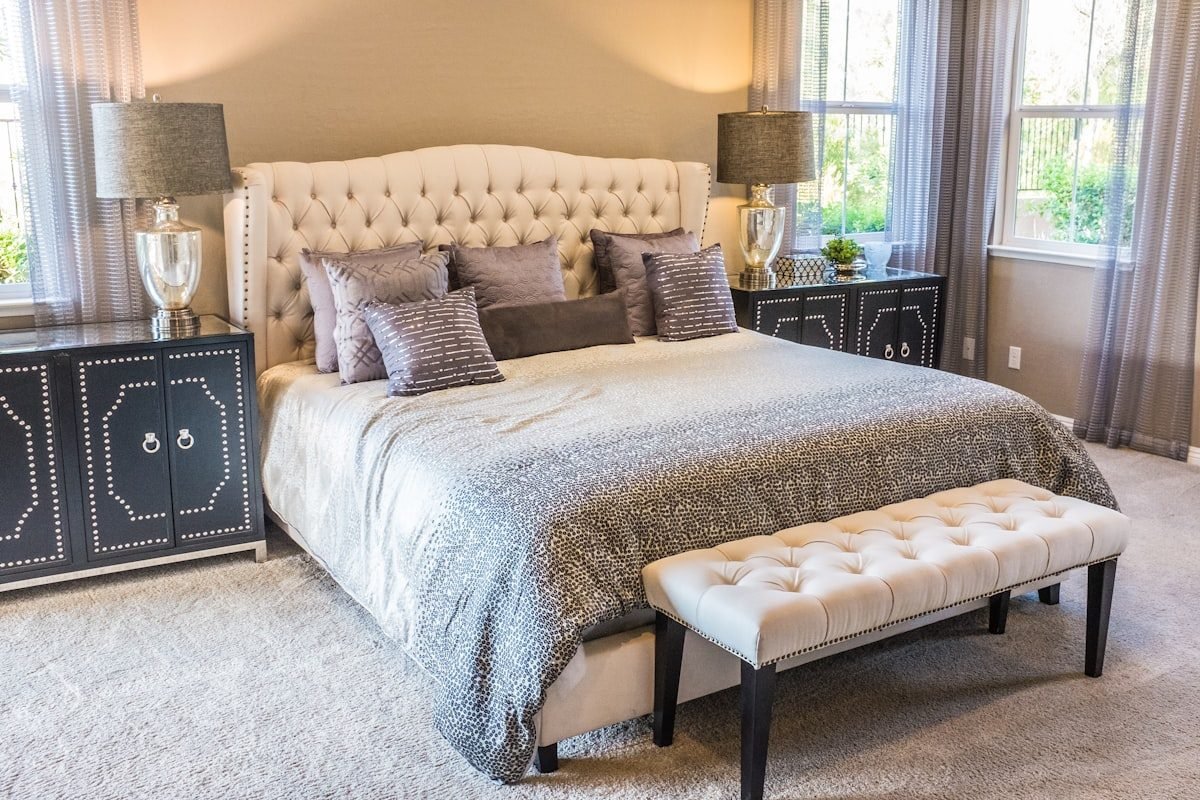
In our relentless 24/7 hyper-connected modern society, chronic sleep deprivation has quietly reached epidemic proportions. Tens of millions of adults wake up feeling chronically exhausted, battling brain fog, elevated stress, compromised immune function, and diminished emotional resilience. While pharmaceutical sleep aids and caffeine have become default coping mechanisms, sleep science reveals a fundamental truth: the physical architecture and sensory environment of your bedroom exerts an overwhelming biological influence on your ability to fall into deep, restorative slow-wave and REM sleep.
Too often, the modern bedroom has devolved into an all-purpose auxiliary space—doubling as a late-night home office with blue-lit laptop screens, a laundry holding station with visual clutter, and an entertainment center with glowing standby lights. Under these conditions, the brain struggles to disconnect, remaining in a hyper-vigilant sympathetic nervous system state.
Transforming your bedroom into a restorative sleep sanctuary is not merely an exercise in interior decorating; it is a profound biological optimization. By systematically controlling temperature dynamics, circadian lighting, acoustic frequencies, air quality, and organic textile breathability, you engineer an immersive sensory haven that triggers deep parasympathetic relaxation.
This comprehensive master handbook translates cutting-edge somnology and circadian biology into actionable domestic upgrades. From engineering total blackout darkness and selecting thermoregulating bedding to acoustic sound-masking and air purification, you will discover how to transform your bedroom into the ultimate temple of rejuvenation.
Key Takeaways & Quick Summary
- The thermal sleep window: Human core body temperature must drop by 2 to 3 degrees Fahrenheit to initiate restorative sleep; maintain bedroom temperatures strictly between 65°F and 68°F.
- Melatonin and circadian photobiology: Eliminating all blue-spectrum light (450-480nm) 90 minutes before bed is essential for pineal gland melatonin secretion; use 100% total blackout drapery.
- Acoustic shielding: Intermittent decibel spikes above 45 dB fragment sleep architecture; deploy dual-motor analog white noise machines to raise ambient acoustic floors.
- Textile breathability: Ditch heat-trapping synthetic microfiber and polyester bedding; invest in 100% organic French flax linen or long-staple Egyptian cotton percale.
- Digital quarantine: Ban smartphones, glowing LED chargers, and television screens from the bedroom to establish an unshakeable psychological Pavlovian sleep association.
- Circadian Photobiology: Total Blackout Darkness and Amber Lighting
- Thermoregulation: Engineering the 65°F to 68°F Microclimate
- Acoustic Architecture and Environmental Air Purification
- Psychological Architecture: The Bedroom Sanctuary Boundary
- Comparative Decision Matrix
- Frequently Asked Questions
- Master Execution Roadmap & Troubleshooting
Circadian Photobiology: Total Blackout Darkness and Amber Lighting
The Biology of Melatonin and Blue-Light Suppression
The human eye possesses specialized photosensitive retinal ganglion cells (ipRGCs) that contain melanopsin. These cells do not contribute to visual sight; instead, they measure ambient light wavelengths and communicate directly with the suprachiasmatic nucleus (SCN)—the master circadian clock in the brain.
Exposure to blue-spectrum light (peaking between 450 and 480 nanometers)—emitted by smartphone screens, LED televisions, and cool-white overhead bulbs—tricks the brain into believing it is midday solar noon, violently suppressing the pineal gland’s secretion of melatonin. To preserve your natural hormonal sleep architecture, eliminate blue light at least 90 minutes prior to intended sleep.
Blackout Drapery Engineering: Eliminating Ambient Photons
Even microscopic light leaks—such as streetlights peeking through window edges or the standby power LED of an air purifier—penetrate closed human eyelids, fragmenting deep sleep cycles. Sleep researchers recommend a sleep environment so dark that you cannot see your own outstretched hand.
Install 100% total blackout drapery: choose curtains with a high-density, three-pass thermal blackout liner. Ensure the drapery rod extends 6 to 8 inches past the window frame on both sides and mounts near the ceiling to prevent ‘light haloing.’ For absolute darkness, install inside-mount blackout honeycomb cellular shades paired with side light-blocking magnetic channel tracks.
Evening Chromotherapy: 2200K Amber Sconces
Switch off harsh overhead ceiling fixtures 2 hours before bed. Transition to low-wattage accent lamps outfitted with 2200K warm amber or red-spectrum LED bulbs (resembling natural campfire and candlelight). Red wavelengths have zero suppressive effect on melatonin, signaling to your endocrine system that it is time to power down.
Editorial Pro Tip: When implementing circadian photobiology: total blackout darkness and amber lighting, consistency in planning and respecting material integrity yields far greater longevity than rushing to complete the work. Prioritize safety, ergonomic comfort, and enduring quality.
Thermoregulation: Engineering the 65°F to 68°F Microclimate
Core Body Temperature Dynamics and Sleep Initiation
To initiate sleep, the human body must shed approximately 2 to 3 degrees Fahrenheit of internal core body heat. This thermal venting is accomplished primarily through vasodilation in the hands, feet, and face, transferring heat away from internal organs into the surrounding air.
If your bedroom ambient temperature is too warm (above 70°F), your body cannot effectively vent heat, resulting in restless tossing, elevated heart rates, and frequent midnight awakenings. Sleep scientists overwhelmingly recommend locking bedroom temperatures between 65°F and 68°F (18°C to 20°C).
A hot bath or shower 60 minutes before bed accelerates this process: the hot water dilates peripheral blood vessels, causing a rapid subsequent drop in core body temperature when stepping out into cool air, triggering immediate somnolence.
Textile Breathability: Natural Flax Linen vs. Synthetic Microfiber
Never dress your bed in cheap polyester, microfiber, or nylon sheets. Synthetic polymers are essentially extruded plastic; they trap moisture and body heat against your skin, creating a sweltering microclimate.
Invest in 100% natural, highly breathable fibers. French Flax Linen is the undisputed king of thermoregulation—its hollow, natural flax fibers naturally wick moisture and permit continuous air circulation, keeping you cool in summer and warm in winter. If you prefer a silky, smooth crisp texture, select 100% long-staple organic cotton in a lightweight percale weave (avoid dense sateen weaves, which trap heat).
Editorial Pro Tip: When implementing thermoregulation: engineering the 65°f to 68°f microclimate, consistency in planning and respecting material integrity yields far greater longevity than rushing to complete the work. Prioritize safety, ergonomic comfort, and enduring quality.
Acoustic Architecture and Environmental Air Purification
Analog White Noise and Sound Masking
It is not silence that helps us sleep; rather, it is acoustic consistency. A sudden noise spike—a car door slamming outside, a barking neighborhood dog, or the cycling of an air conditioning compressor—jolts the auditory cortex, triggering a micro-arousal that disrupts sleep continuity.
Deploy an analog dual-speed motorized sound conditioner (such as the Marpac Dohm). Unlike digital smartphone apps that loop artificial audio recordings, an analog machine uses a physical fan spinning inside an acoustic housing, producing rich, soothing, non-repeating pink/white noise that masks startling ambient sounds.
Medical-Grade True HEPA Air Purification and VOC Filtration
We spend one-third of our lives inhaling the air inside our bedrooms. Poor bedroom air quality—laden with microscopic dust mites, pet dander, mold spores, and volatile organic compounds (VOCs) off-gassing from furniture adhesives—causes nasal congestion, airway irritation, and nighttime snoring.
Install a medical-grade True HEPA air purifier (such as Coway Airmega or Austin Air) equipped with an activated carbon filter to neutralize chemical odors and gaseous toxins. Position the purifier near your bed and run it continuously on silent mode to ensure clean, oxygen-rich breathing all night long.
Editorial Pro Tip: When implementing acoustic architecture and environmental air purification, consistency in planning and respecting material integrity yields far greater longevity than rushing to complete the work. Prioritize safety, ergonomic comfort, and enduring quality.
Psychological Architecture: The Bedroom Sanctuary Boundary
The Absolute Digital Screen Quarantine
Establish an unbreakable household law: The bedroom is exclusively for sleep and intimacy. Ban work laptops, paperwork, exercise machines, and television screens from the room.
Charging your smartphone on your nightstand is an open invitation for anxiety: a midnight glance at the time triggers mental calculations of remaining sleep hours, while notifications pull your mind back into workplace crises. Purchase a dedicated mechanical analog alarm clock, and charge your phone overnight in the kitchen or hallway.
Biophilic Elements and Calming Organic Scents
Incorporate calming biophilic botanical touches: place a Snake Plant (Sansevieria) or Peace Lily on your nightstand; unlike most plants that emit CO2 at night, snake plants produce oxygen continuously through Crassulacean Acid Metabolism (CAM).
Diffuse pure organic French Lavender (Lavandula angustifolia) essential oil for 20 minutes before bedtime. Clinical studies confirm that inhaling linalool, the active terpene in lavender, directly stimulates GABA receptors in the brain, slowing resting heart rate and inducing tranquil relaxation.
Editorial Pro Tip: When implementing psychological architecture: the bedroom sanctuary boundary, consistency in planning and respecting material integrity yields far greater longevity than rushing to complete the work. Prioritize safety, ergonomic comfort, and enduring quality.
Comparative Decision Matrix
Use this structured comparison to weigh critical options, material requirements, cost allocations, and long-term performance.
| Sleep Sanctuary Component | Optimal Recommended Specification | Physiological Sleep Benefit | Estimated Investment Range | Impact Rating |
|---|---|---|---|---|
| Ambient Temperature | 65°F – 68°F (18°C – 20°C) | Triggers natural core body cooling & deep sleep | Free (thermostat adjustment) | Critical (5/5) |
| Window Blackout System | 3-pass thermal blackout curtains + side tracks | Maximizes melatonin secretion; prevents micro-arousals | $80 – $200 | Critical (5/5) |
| Bedding Sheets | 100% French Flax Linen or Organic Cotton Percale | Wicks moisture; prevents night sweats and overheating | $120 – $280 | High (4.5/5) |
| Acoustic Masking | Dual-speed motorized analog sound machine (Dohm) | Masks sudden decibel spikes; raises ambient audio floor | $45 – $60 | High (4/5) |
| Air Purification | True HEPA (H13) filter + activated carbon bed | Prevents airway inflammation, snoring & allergies | $150 – $350 | High (4/5) |
Frequently Asked Questions
How do I keep my bed cool if my mattress traps body heat?
Many memory foam mattresses contain dense polyurethane that absorbs and retains body heat. To fix this without buying a new mattress, add a 100% natural wool or latex mattress topper, which creates an organic breathable cushion of air beneath your body. Additionally, switch to a thermoregulating duvet filled with lightweight natural mulberry silk or wool rather than down or polyester.
Is it better to sleep with a window cracked open at night?
Yes, provided outdoor air quality and neighborhood noise levels are favorable. Cracking a window increases ventilation and prevents carbon dioxide (CO2) from accumulating in an enclosed bedroom. Studies show that elevated nighttime CO2 levels (>1000 ppm) lead to lower sleep efficiency and morning grogginess.
How often should pillows and mattresses be replaced?
Bed pillows absorb dead skin cells, body sweat, and dust mites; they should be replaced every 1 to 2 years (or washed quarterly if made from washable natural latex). A quality mattress typically provides optimal spinal alignment for 7 to 10 years; if you wake up with lower back stiffness or notice a permanent body impression, it is time for an upgrade.
Do weighted blankets actually improve sleep quality?
For individuals suffering from anxiety, ADHD, or sensory restlessness, weighted blankets (typically 10% of total body weight) utilize Deep Touch Pressure (DTP) therapy. This gentle, evenly distributed pressure stimulates serotonin and melatonin production while suppressing the sympathetic fight-or-flight nervous system.
What is the best way to transition from a night owl to an early riser?
Do not try to change your sleep schedule by 4 hours overnight. Shift your wake-up time 15 minutes earlier every 3 days. Most importantly, seek 15 minutes of direct morning sunlight within 30 minutes of waking; early photons hitting the retina reset your master circadian clock, ensuring you will naturally feel tired 16 hours later.
Master Execution Roadmap & Preventive Troubleshooting
Critical Phase Milestones and Quality Verification
Every master-level home and design undertaking succeeds or stumbles on the discipline of its initial verification phase. Before committing resources or making irrevocable physical changes, establish a clear tolerance baseline. For structural, architectural, or soil-based projects, measure twice, verify microclimates, test load capabilities, and review long-term environmental factors. Never bypass diagnostic staging; spending 48 hours observing ambient sunlight, moisture patterns, or surface moisture barriers prevents thousands of dollars in premature remedial repairs.
Establish strict quality gates at the 25%, 50%, and 75% completion intervals. If a joint is out of square, a soil amendment shows abnormal alkalinity, or an undercoat fails adhesion testing, resolve the discrepancy immediately rather than hoping finish coats or surface dressing will conceal underlying flaws. True professional craftsmanship is distinguished by the uncompromising rigor applied to the structural layers that casual observers never see.
Common Mistakes, Diagnostic Indicators, and Solutions
One of the most pervasive missteps among homeowners is material over-saturation—whether that entails overloading biological soil with synthetic nitrogen, rushing multi-coat paint applications without complete drying windows, or crowding decorative furnishings without sufficient negative space. When materials cannot breathe, cure, or establish natural equilibrium, early failure is inevitable. Maintain patient curing windows, ensure ample ventilation, and give living ecosystems the biological time required to stabilize.
Another frequent hazard is neglecting ongoing preventative maintenance cycles. Design systems and home environments operate under dynamic seasonal forces—thermal expansion, humidity fluctuations, UV exposure, and microbial activity continuously alter physical dimensions and chemical balances. Formulate a semi-annual inspection schedule: inspect caulking seals, monitor organic mulch decomposition, audit electrical connections, and service mechanical hardware before minor wear deteriorates into major structural failure.
Final Verdict & Practical Action Plan
Your bedroom should be the most revered, restorative sanctuary in your home—a sacred space intentionally engineered to insulate you from the chaotic demands of the modern world.
By respecting your body’s circadian biology, maintaining cool thermal boundaries, investing in breathable natural textiles, and purging digital distractions, you unlock the transformative power of profound nightly rest, awakening each morning with boundless vitality, mental sharpness, and joy.